
 Ask Hadi

There is a question at the center of the Christian faith that is surprisingly difficult to answer with scripture. Not with theology, not with inference, not with the philosophical architecture of church councils, but with the actual recorded words of Jesus.
The question is simple: did Jesus ever say he was God?
Not "did his followers later conclude he was God," not "did the church eventually define him as God," but did Jesus himself, the man from Galilee who walked the roads of Palestine and spoke to crowds in Aramaic, ever open his mouth and say, in plain language, "I am God, worship me"?
If you grew up Christian, you probably assume the answer is yes. You have heard it preached. You have seen it printed on bumper stickers and bookmarks. But try to find the verse. Open a concordance. Search the red letters. What you will discover is a silence so consistent it starts to feel like a message of its own.
The New Testament scholar Bart Ehrman explored this question with forensic care in his 2014 work How Jesus Became God: The Exaltation of a Jewish Preacher from Galilee . In an interview with NPR's Fresh Air, he stated:
This is not a Muslim speaking. This is one of the world's foremost scholars of early Christianity, the James A. Gray Distinguished Professor at the University of North Carolina at Chapel Hill, a man who studied at evangelical institutions before the evidence led him elsewhere.
That evidence is worth walking through, because it changes the shape of the conversation entirely.
"I and my Father are one": the verse everyone quotes and nobody finishes
If you ask a Christian to prove Jesus claimed divinity, the first verse that will hit the table is John 10:30. The King James Version renders it:
Conversation over. But the conversation is only over if you stop reading at verse 30. If you keep going, the passage tells a very different story.
The context begins at verse 23.
The Greek word for "one" here is hen, the neuter form. Not heis, the masculine, which would indicate one person or one being. Hen points to unity of purpose, of will, of mission. How do we know? Because Jesus uses the exact same word in John 17:21 to 22 when praying for his disciples.
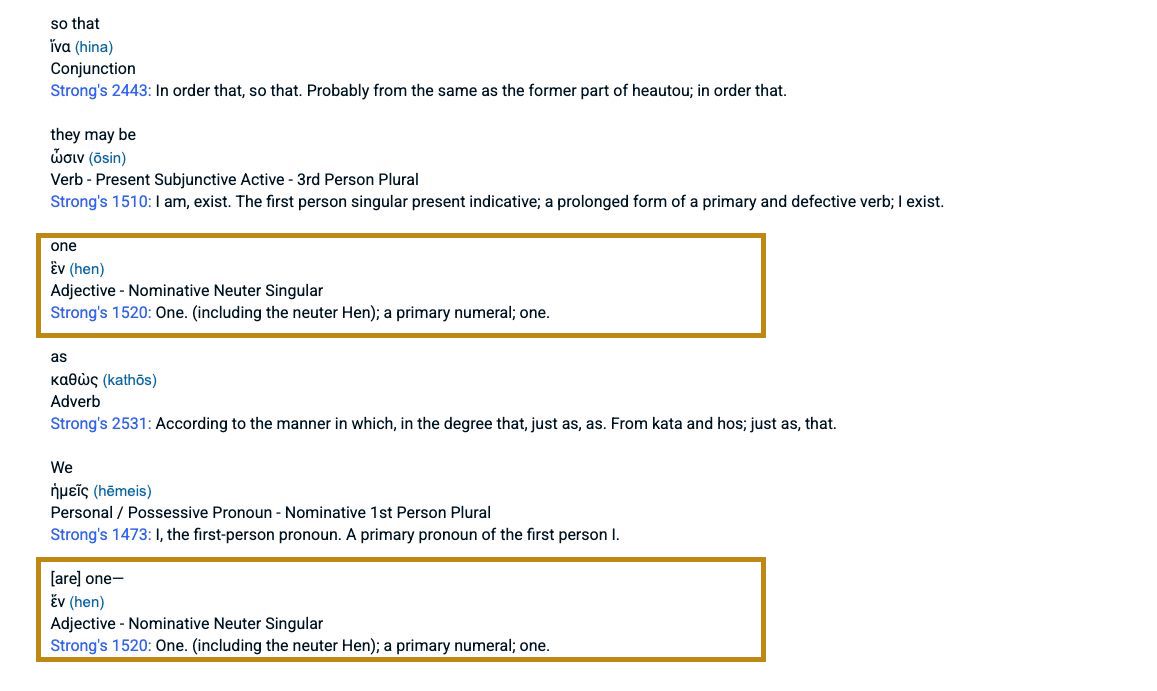
Jesus using the identical neuter hen for his disciples' unity with God.
And the glory which thou gavest me I have given them; that they may be one, even as we are one:
John 17:22
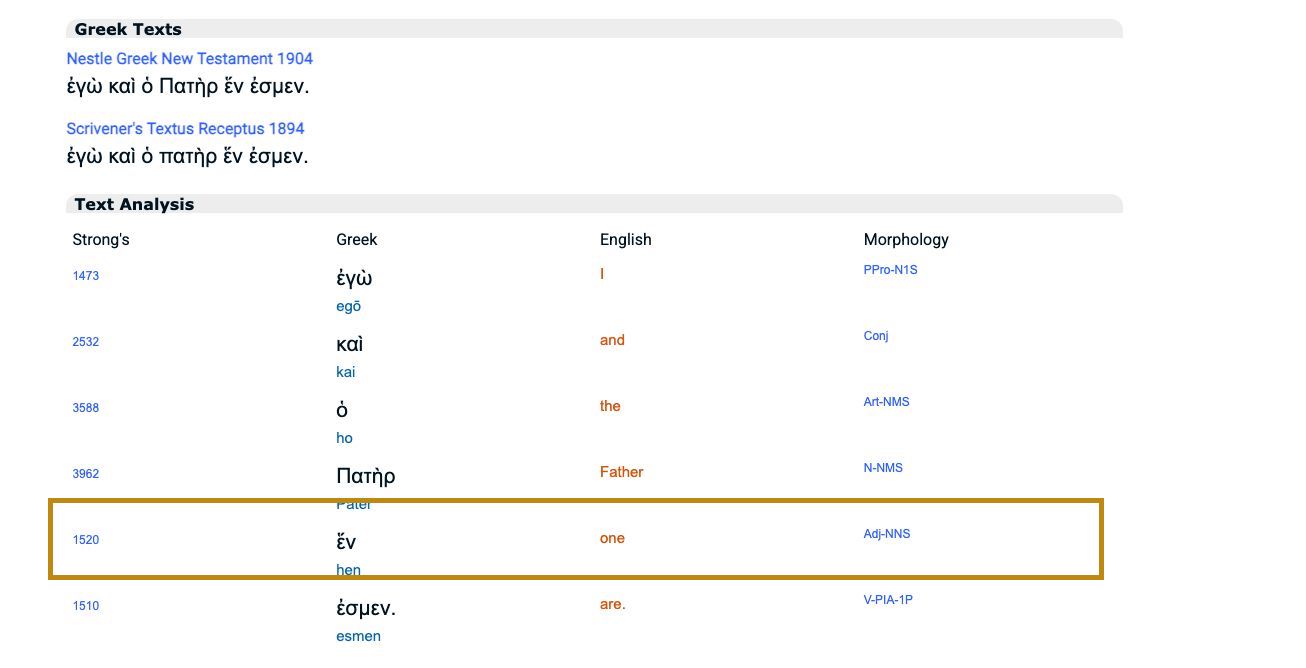
The word for "one" is ἕν (hen), neuter, meaning unity of purpose, not εἷς (heis), masculine, which would mean one person.
I and my Father are one.
John 10:30
Same word. Same grammar. Raymond Brown, in his Anchor Yale commentary The Gospel According to John, noted that the oneness spoken of in 10:30 "also concerns men; for just as the Father and Son are one, so they bind men to themselves as one."
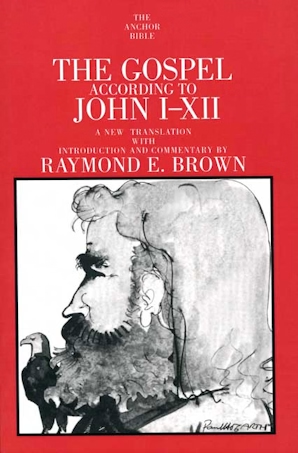
“We note that vss. 28 and 29 make the same statement about Jesus and about the Father: no one can snatch the sheep from either's hand. This leads us to an understanding of the unity that is expressed in 30: it is a unity of power and operation. It was an affirmation such as found in 30”
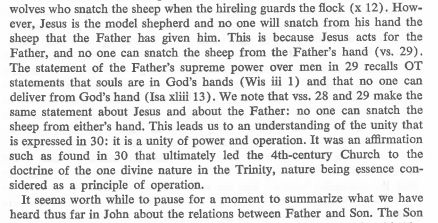
Confirms that the oneness Jesus speaks of in John 10:30 is "a unity of power and operation," not a claim of being God. Brown notes that verses 28 and 29 make the same statement about Jesus and the Father, that no one can snatch the sheep from either's hand, and it is this functional unity that verse 30 expresses.
If "I and the Father are one" proves Jesus is God, then by the identical logic, every one of his twelve disciples, Judas included, is also God. The word is the same. The grammar is the same. The only thing that differs is what the reader brings to the text before reading it.
Greater, nothing, don't know, not good, not my will
Strip away the councils. Forget the creeds. Ignore two thousand years of interpretation. Let Jesus speak for himself, in his own words, recorded by his own followers:
Not as I will, but as thou wilt. Two wills. Two beings. The one on the ground and the one being addressed. The posture is sujud, the prostration of a servant before his Lord. The relationship is creature to Creator.

It is how Abraham worshipped. How Moses worshipped. How Muhammad ﷺ worshipped. It is how 1.9 billion Muslims pray five times a day. It is not how a single Christian church on earth teaches its congregation to pray. It is how Abraham worshipped. How Moses worshipped. How Muhammad ﷺ worshipped. It is how 1.9 billion Muslims pray five times a day. It is not how a single Christian church on earth teaches its congregation to pray. The people who pray the way Jesus prayed are not the ones who call him God.
To whom does God pray? The question answers itself.
A man. Approved by God. Through whom God worked. Not God himself, but a man through whom God acted.
The Qur'an heard him
There is a scene in the Qur'an that carries a weight unlike almost anything else in scripture. It is not an argument. It is a conversation on the Day of Judgment.

QURAN
“And behold! Allah will say: "O Jesus the son of Mary! Didst thou say unto men, worship me and my mother as gods in derogation of Allah'?" He will say: "Glory to Thee! never could I say what I had no right (to say). Had I said such a thing, thou wouldst indeed have known it. Thou knowest what is in my heart, Thou I know not what is in Thine. For Thou knowest in full all that is hidden.”
وَإِذْ قَالَ ٱللَّهُ يَـٰعِيسَى ٱبْنَ مَرْيَمَ ءَأَنتَ قُلْتَ لِلنَّاسِ ٱتَّخِذُونِى وَأُمِّىَ إِلَـٰهَيْنِ مِن دُونِ ٱللَّهِ ۖ قَالَ سُبْحَـٰنَكَ مَا يَكُونُ لِىٓ أَنْ أَقُولَ مَا لَيْسَ لِى بِحَقٍّ ۚ إِن كُنتُ قُلْتُهُۥ فَقَدْ عَلِمْتَهُۥ ۚ تَعْلَمُ مَا فِى نَفْسِى وَلَآ أَعْلَمُ مَا فِى نَفْسِكَ ۚ إِنَّكَ أَنتَ عَلَّـٰمُ ٱلْغُيُوبِ
Al-Mâ’idah 5:116I never told them to do this.
The weight of that moment, Jesus himself denying the very claim that billions built their faith upon, is staggering. And it is not delivered as polemic. The Qur'an's tone here is almost tender, as though recounting something heartbreaking rather than scoring a point.
Elsewhere, the Qur'an puts the denial in Jesus' own preaching.
How a prophet became a God
So how did a Jewish teacher from Galilee come to be worshipped as the Creator of the universe?
His earliest followers were Jews who recited the Shema daily: "Hear, O Israel: The LORD our God is one LORD" (Deuteronomy 6:4). One. Not three. These were the last people on earth inclined to deify a human being. But then Paul, who never walked with Jesus during his ministry, began reframing him in categories borrowed from Greco-Roman divine kingship. And then the movement spread into the Roman world, where gods had sons and sons had divine natures and nobody found it strange for a man to be elevated to divinity after death. As Ehrman noted in his NPR interview: "Right at the same time that Christians were calling Jesus 'God' is exactly when Romans started calling their emperors 'God.' So these Christians were not doing this in a vacuum."
By 325 CE, Emperor Constantine convened the First Council of Nicaea. The Encyclopaedia Britannica records that Constantine was "an unbaptized catechumen, who presided over the opening session." His motivation, as historians have documented, "was not purely theological; he saw religious unity as essential for the political stability of his newly unified empire.
