
Fasting in Ramadan: A Month That Changes You
Once a year, Muslims stop eating, drinking, and indulging — from dawn to sunset — for an entire month. Not as punishment. As training.
 QURAN
QURAN“O believers! Fasting is prescribed for you as it was prescribed for the people before you so that you may become pious.”
يَا أَيُّهَا الَّذِينَ آمَنُوا كُتِبَ عَلَيْكُمُ الصِّيَامُ كَمَا كُتِبَ عَلَى الَّذِينَ مِن قَبْلِكُمْ لَعَلَّكُمْ تَتَّقُونَ ١٨٣
What fasting means in Islam
Fasting in Islam is not about starving yourself. It is about learning what your body actually needs — versus what it craves.
Sawm means to restrain — not only from food, but from all forms of consumption and distraction, stepping back from what usually fills your day.
During Ramadan, Muslims abstain from food, drink, and sexual intimacy from dawn to sunset each day for about 29–30 days.
Fasting quiets the noise, creating space for gratitude, patience, empathy, and closeness to God — the hunger is just the beginning.
QURAN“O believers! Fasting is prescribed for you as it was prescribed for the people before you so that you may become pious.”
يَا أَيُّهَا الَّذِينَ آمَنُوا كُتِبَ عَلَيْكُمُ الصِّيَامُ كَمَا كُتِبَ عَلَى الَّذِينَ مِن قَبْلِكُمْ لَعَلَّكُمْ تَتَّقُونَ ١٨٣
Why Muslims fast
Fasting does several things at once. The hunger is just the entry point. The real transformation happens inside.
It teaches gratitude
When you go without water for 14 hours, that first sip at sunset becomes something sacred. You suddenly understand what millions of people feel every day — not by choice.
It builds discipline
You are not fasting because someone is watching. No one can see whether you sneaked a sip of water. This is between you and God. That is the point. It trains sincerity.
It softens the heart
Hunger opens something in you. You feel what others feel. You become more generous, more patient, more aware of how much you usually take for granted.
It resets the soul
Ramadan is the month Muslims give the most charity, read the most Qur'an, and repair the most relationships. The hunger is just the entry point. The real transformation happens inside.

"Whoever Fasts Ramadan Out Of Sincere Faith And Hoping For Reward, His Previous Sins Will Be Forgiven."
Who fasts and who is exempt
Fasting is required for every adult Muslim who is physically able. Islam builds in clear exemptions — the goal is to build you, not break you.
Not required until puberty
Many practise voluntarily for part of the day
Exempt if fasting would cause real harm to health
Feed a person in need for each missed day
Exempt if fasting risks their health or the baby's
Make up days later, or feed others instead
Long journeys are considered hardship
Make up the missed days at a time that is easier
Illness makes fasting harmful
Make up the days after recovery
Fasting is permanently not possible
Feed a person in need for each missed day
They pause — it is not permitted during those days
Make up the days after Ramadan
 QURAN
QURAN“The month of Ramadan (is the month) in which the Qur’an has been sent down as guidance for mankind containing clear signs which lead (to the straight road) and distinguishing (the truth from falsehood). Therefore, he who witnesses this month must fast it, and he who is ill or on a journey should complete the count by (fasting on equal number of) other days. Allah desires ease for you and does not desire hardship for you so that you complete the prescribed number of fasting days, and that you glorify Him for the guidance which He has blessed you with, and that you may become grateful.”
شَهْرُ رَمَضَانَ الَّذِي أُنزِلَ فِيهِ الْقُرْآنُ هُدًى لِّلنَّاسِ وَبَيِّنَاتٍ مِّنَ الْهُدَىٰ وَالْفُرْقَانِ ۚ فَمَن شَهِدَ مِنكُمُ الشَّهْرَ فَلْيَصُمْهُ ۖ وَمَن كَانَ مَرِيضًا أَوْ عَلَىٰ سَفَرٍ فَعِدَّةٌ مِّنْ أَيَّامٍ أُخَرَ ۗ يُرِيدُ اللَّهُ بِكُمُ الْيُسْرَ وَلَا يُرِيدُ بِكُمُ الْعُسْرَ وَلِتُكْمِلُوا الْعِدَّةَ وَلِتُكَبِّرُوا اللَّهَ عَلَىٰ مَا هَدَاكُمْ وَلَعَلَّكُمْ تَشْكُرُونَ ١٨٥
The month that holds everything
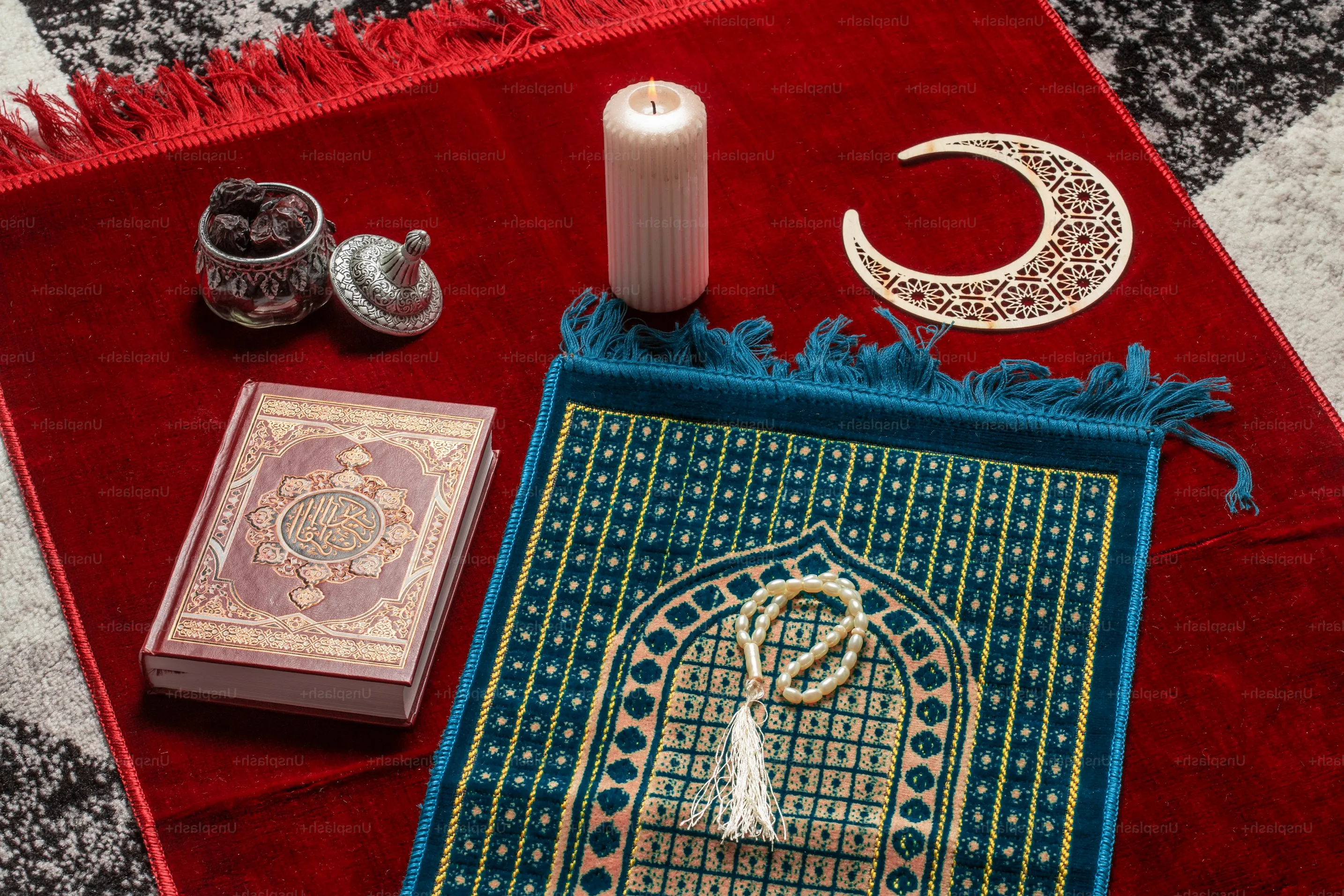
Ramadan is the month the Qur'an was first revealed. That alone makes it sacred. But in practice, it becomes a full reset for the year — a month-long recalibration of the soul.
Read the Qur'an
Many Muslims read or complete the entire Qur'an during Ramadan — one of the most common personal goals for the month.
Increase in prayer
Muslims add the long night prayers — Tarawih — after Isha each evening throughout the month. The mosque fills nightly.
Give charity
Many Muslims pay their annual Zakat during Ramadan, when rewards are believed to be multiplied. Generosity peaks in this month.
Repair relationships
Ramadan is a time to seek forgiveness — from God and from each other. Old grudges are softened. Families reunite.
Community and mosque
More time is spent together — in the mosque, breaking fast as a community, sharing Suhoor before dawn.
The final ten nights
The last ten nights of Ramadan are the most powerful. Many Muslims spend them in the mosque, praying until dawn.
LAYLAT AL-QADR · THE NIGHT OF DECREE
Better than a thousand months
لَيْلَةُ الْقَدْرِ خَيْرٌ مِّنْ أَلْفِ شَهْرٍ
Hidden within the last ten nights of Ramadan is a night the Qur'an describes as more powerful than a thousand months of worship. Muslims search for it in prayer, staying awake until dawn.
Fasting in other traditions
If you come from a Christian background, fasting is not unfamiliar. Jesus fasted for forty days in the wilderness. Moses fasted. Lent involves forms of fasting and abstinence. Islam takes this tradition and makes it a defined, annual, community-wide practice.

“Jesus fasted for forty days and forty nights, and afterward he was famished.”
Christianity has a deep tradition of fasting — from Lent to monastic disciplines. Islam formalises it into a shared, annual practice that the entire community observes together.
“Moses was there with the Lord forty days and forty nights without eating bread or drinking water.”
Moses fasted in the presence of God. In Islam, fasting is also understood as drawing nearer to God — a shared thread across the Abrahamic tradition.
There is something powerful about an entire community choosing to go hungry together — not because they have to, but because it brings them closer to God and to each other.
Eid al-Fitr — the celebration after the effort
When the crescent moon of Shawwal appears, thirty days of restraint give way to something entirely different — celebration.
When Ramadan ends, Muslims celebrate Eid al-Fitr — the Festival of Breaking the Fast.
It begins with a special morning prayer. Families dress in their best clothes. People visit each other, share meals, and give gifts. Children receive money and sweets. It is joyful, warm, and communal.
Before the Eid prayer, every Muslim household pays Zakat al-Fitr — a small charity — so that even the poorest families can celebrate the day. The month asks something of you. And then it gives back more than it took.